What Is Better for Learning Rust in 2026, Solo Survival or Group Play, and Why Solo Wins on Oil Rig
You can order the same kind of articles for your own video to boost it on YouTube and Google. Just message the Telegram bot @sat_sit_bot. The bot writes and publishes the articles itself (with your YouTube video embedded) on popular topical websites (no ads). Try it free: 50 articles on us.
· based on the channel Blooprint
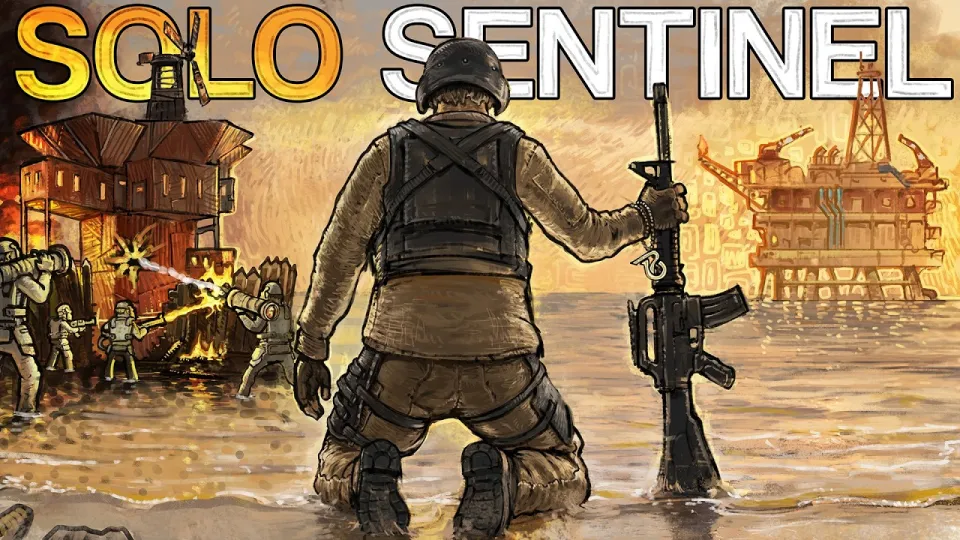
Rust is better played solo when your goal is to actually learn the game: one player farming, building, defending and snowballing alone next to a contested monument like oil rig develops faster decision-making than any group wipe. Group play is more forgiving and produces bigger raids, but it hides the mistakes that solo punishes immediately. Blooprint's solo run on a fresh wipe, built right beside oil rig, is a clean example of why the lonely version of the game is the more instructive one — you can follow his live attempts on his Twitch channel, where the same solo decision-making happens in real time.
Why solo survival teaches Rust faster than group play
Solo survival compresses every system in Rust into one player's attention, so nothing gets skipped. In a group, farming, crafting, scouting and fighting are split between people; in a solo wipe you do all of it, and every shortcut shows up in your base or your death screen.
The core loop a solo has to master:
- Land a start with enough space to build without being seen immediately.
- Farm the materials for a starter base and a workbench before the first groups finish their own.
- Secure a source of scrap and components — monuments, roads, or the ocean — without a teammate watching your back.
- Convert early scrap into weapons and explosives before the server's groups consolidate.
- Defend the base with turrets, doors and traps, because there is no second player to hold an angle.
Each step punishes hesitation. A group can lose a fight and still have someone at base crafting; a solo who dies on the way to the oil rig loses the kit, the time and often the base if a raider is already outside.
What building next to oil rig as a solo actually means
A base beside oil rig is a bet that constant traffic is worth constant danger. Oil rig is one of the most contested monuments in Rust: it holds military crates, heavy scientist resistance and a shortcut to high-tier loot, and it draws groups on boats and helicopters all wipe. Living next to it means you hear every raid before it arrives — and that everyone who arrives sees your base.
The trade-offs are concrete:
- Loot access: you can hit the rig repeatedly with minimal travel, which is the fastest solo route to military-grade gear.
- Visibility: your base is on the route of every group doing oil, so it will be scouted, tested and eventually raided.
- Defense pressure: turrets, shotgun traps and sealed rooms stop small probing raids; nothing stops a determined group with rockets.
- Respawn value: a nearby bag or bed turns a failed rig run into a five-minute retry instead of a full re-gear.
Snowballing on wipe day as a solo player
The first hours of a wipe decide whether a solo base survives the week. Blooprint's run follows the standard solo snowball: primitive start, quick workbench, a cheap kit, then a monument push for better weapons while groups are still organizing. The window is short — groups that start with numbers can reach tier two and tier three gear quickly, and once they do, a solo base near a monument becomes a target rather than a threat.
Snowballing well means accepting risk in the right order:
- Get a base down and a bed or bag inside before chasing loot.
- Craft the cheapest reliable weapon you can use well, not the most expensive one you can afford.
- Take fights you can disengage from; every lost kit is a full reset.
- Bank loot in the base between runs instead of carrying everything into the next fight.
- Upgrade walls and add turrets before the first night, not after the first raid.
Defending a solo base against a raid
Base defense is where solo Rust is won or lost, and it is the part group players never practice properly. A solo defender has to read the raid, decide whether to fight from inside or flank, and spend resources — turrets, doors, traps — in the right order. Blooprint's defense in this run drew the attackers' respect even when the exchange went badly, which is the realistic outcome: a solo base near a high-traffic monument will eventually meet a group with rockets.
Practical defense priorities for a solo:
- Seal every room; an open compartment is a free loot room for the raider.
- Layer doors so the first breach costs more explosives than the loot behind it is worth.
- Place turrets where they cover the approach, not just the front door.
- Keep a secondary stash and a backup bag away from the main base.
- Decide in advance what you will abandon and what you will defend.
What viewers actually want from solo Rust content
The audience reaction to solo videos is consistent: solo play keeps the creator talking to the viewer rather than to teammates, so the thinking behind each decision stays visible. Group wipes show efficient progression and big raids, but the commentary turns into team comms, and the viewer loses the play-by-play that makes Rust understandable to people who do not play it.
The recurring requests in the comments point the same way: more solo series, unusual base locations such as cave bases, and collaborations with random players met during a wipe rather than fixed teams. Viewers also enjoy the small human moments — late-night encounters at oil rig, improvised base names, the absurdity of a 3 a.m. raid — because those come from a solo run where nothing is scripted by a team.
Blooprint's links and where to follow the solo runs
Blooprint publishes solo wipes, raid defenses and full wipe movies, and streams the same gameplay live. All official links:
- Twitch: https://www.twitch.tv/blooprint
- Kick: https://kick.com/blooprint
- TikTok: https://www.tiktok.com/@blooprintgames
- Twitter: https://twitter.com/blooprintgames
- Discord: https://discord.gg/blooprint
Conclusion
Solo survival is the better Rust teacher because it removes every cushion: one player, one base, one kit at a time, and a monument like oil rig that guarantees attention from groups. Group play still delivers the biggest raids and the fastest progression, but it does not build the same instincts. Blooprint's solo wipe next to oil rig shows the whole cycle — snowball, loot, defense, loss — in a single run, and the video breakdown is worth watching for the defense alone. Follow the live version on Blooprint's Twitch stream to see those decisions made in real time.
Key takeaways
- Blooprint's solo run centers on a small base built directly beside the oil rig monument on a fresh wipe.
- Solo play forces one player to handle farming, crafting, base defense and monument control without team comms.
- A solo base near oil rig trades safety for constant traffic: every passing group is a potential raider.
- Snowballing from primitive gear to military weapons in the first hours is the core skill solo teaches.
- Base defense against a rocket raid is the decisive test of a solo wipe, not the loot count.
Source: The Solo Sentinel - Rust · Markdown version
Questions & answers
Is it worth building a solo base next to oil rig in Rust?
It is worth it if you plan to run the monument constantly and can defend a high-traffic location. Oil rig gives fast access to military crates and high-tier loot, but your base will be scouted by every group doing the monument. Build cheap, seal every room and expect a rocket raid.
How does a solo player snowball on a fresh Rust wipe?
Get a starter base and a bag down first, then craft a cheap reliable weapon and push monuments while groups are still organizing. Bank loot between runs and upgrade walls and turrets before the first night. Every lost kit is a full reset, so avoid fights you cannot disengage from.
Why do viewers prefer solo Rust videos over group content?
Solo videos keep the creator talking to the audience instead of to teammates, so the reasoning behind each decision stays visible. Group wipes show efficient progression but replace commentary with comms. Solo runs also produce unscripted encounters, which viewers find more relatable.
Can a solo base survive a raid by a group with rockets?
Sometimes, but the realistic goal is to make the raid expensive rather than impossible. Layer doors, seal compartments, place turrets covering the approach and keep a backup stash away from the main base. Even a lost defense can earn respect and buy time to rebuild.